Alternative Realities
Anna Drummond

From circular libraries to long, linear courtyards, Ormond’s archives reveal the unrealised designs that could have shaped its campus – a glimpse into the alternative architectural futures that make today’s College all the more remarkable.
Sunday 13 March 2022 • 5 minute read
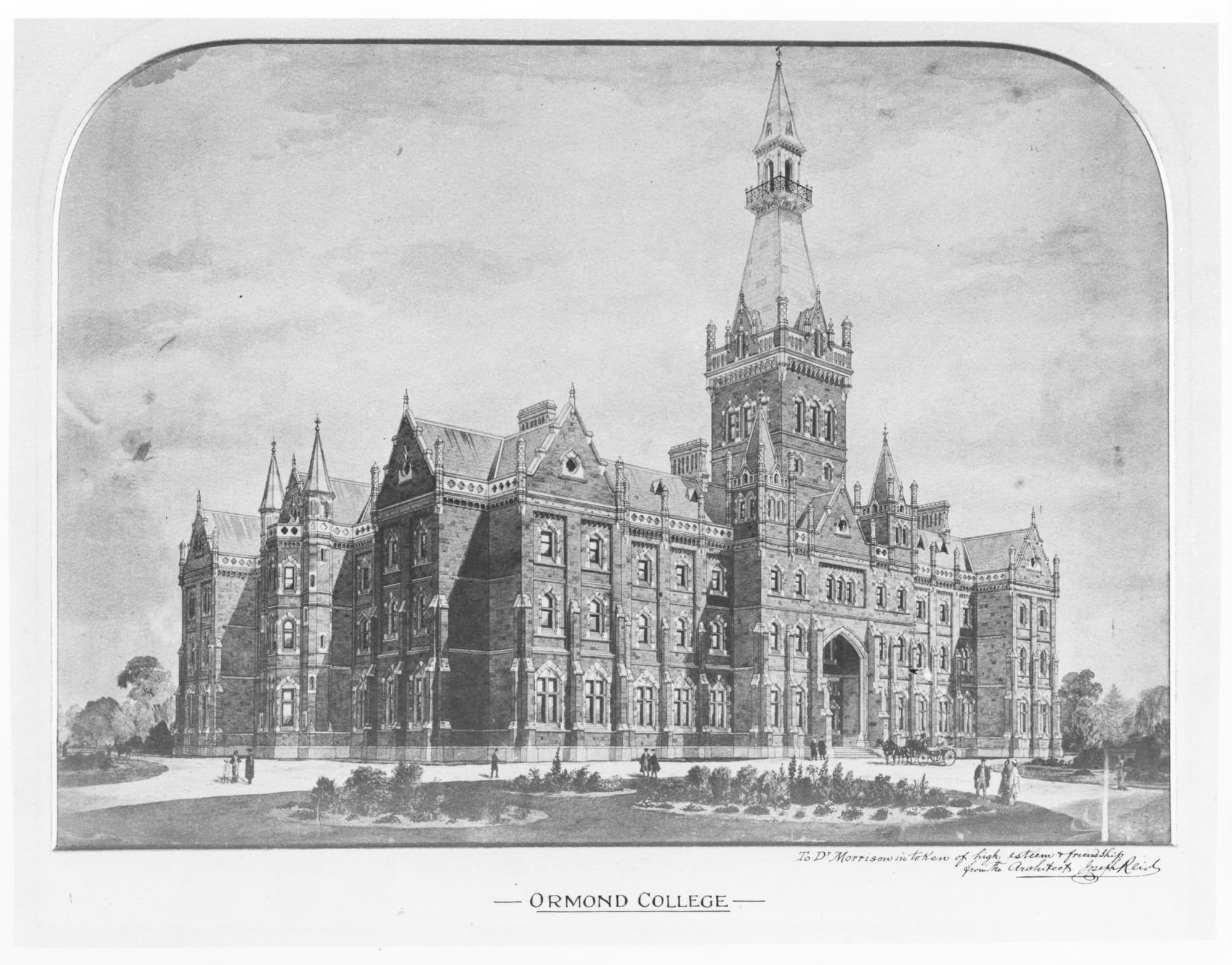
Ormond’s architecture is so significant that most of our campus is heritage listed. As well as magnificent Main Building, our fine collection of mid-century modern buildings are also protected. Our campus could however have looked quite different.Our archives contain an almost complete set of plans for Ormond’s buildings, within which is a set of alternative designs for these structures. These were design options presented to the College by our architects but ultimately rejected, preserved now in beautiful, hand-drawn visions of an alternative reality.When Picken Court was at the concept stage, for example, the architects proposed several different possible forms for the new building. One option was a long, rectangular block similar to the mid-century wings built by our neighbouring colleges. Had this been chosen over the three pavilion-shaped Picken Court buildings we eventually settled on and constructed in 1961, the view from Picken Lawn would have been quite different.Also distinct are the alternative concepts for the MacFarland Library (1965) which is now known as the Academic Centre. A circular building was one of the ideas proposed by the architects, iconic Melbourne firm Grounds, Romberg and Boyd. The round structure exists now only in a beautiful hand-drawn image in our archives. It’s not clear why the College chose the polygonal design we now enjoy, but it is in keeping with the shapes of Picken Court and was echoed by McCaughey Court when it was built three years later.This repeated choice of a polygon shape is one of the things that unites Ormond’s buildings, which between them deploy a range of architectural styles from Victorian Gothic to Passivhaus. This and other features help our diverse set of buildings feel cohesive. Perhaps this is why these other designs for rectangular and circular buildings were rejected. Whatever the reason, these plans are a fascinating vision of an alternative reality.

Explore our publications
Ormond’s publications capture the life of the College – its people, ideas and impact across generations. From stories of students shaping their world to updates from alumni making a difference far beyond Parkville, each edition reflects the spirit of curiosity and community that defines Ormond.
Read more