Bookish Haunts
From tutorials in the Academic Centre to evenings in the Dining Hall, students explored ideas, built friendships, celebrated traditions, and embraced new opportunities. Here’s how Ormond’s spaces continue to inspire learning and community.
Wednesday 7 September 2022 • 2 minute read
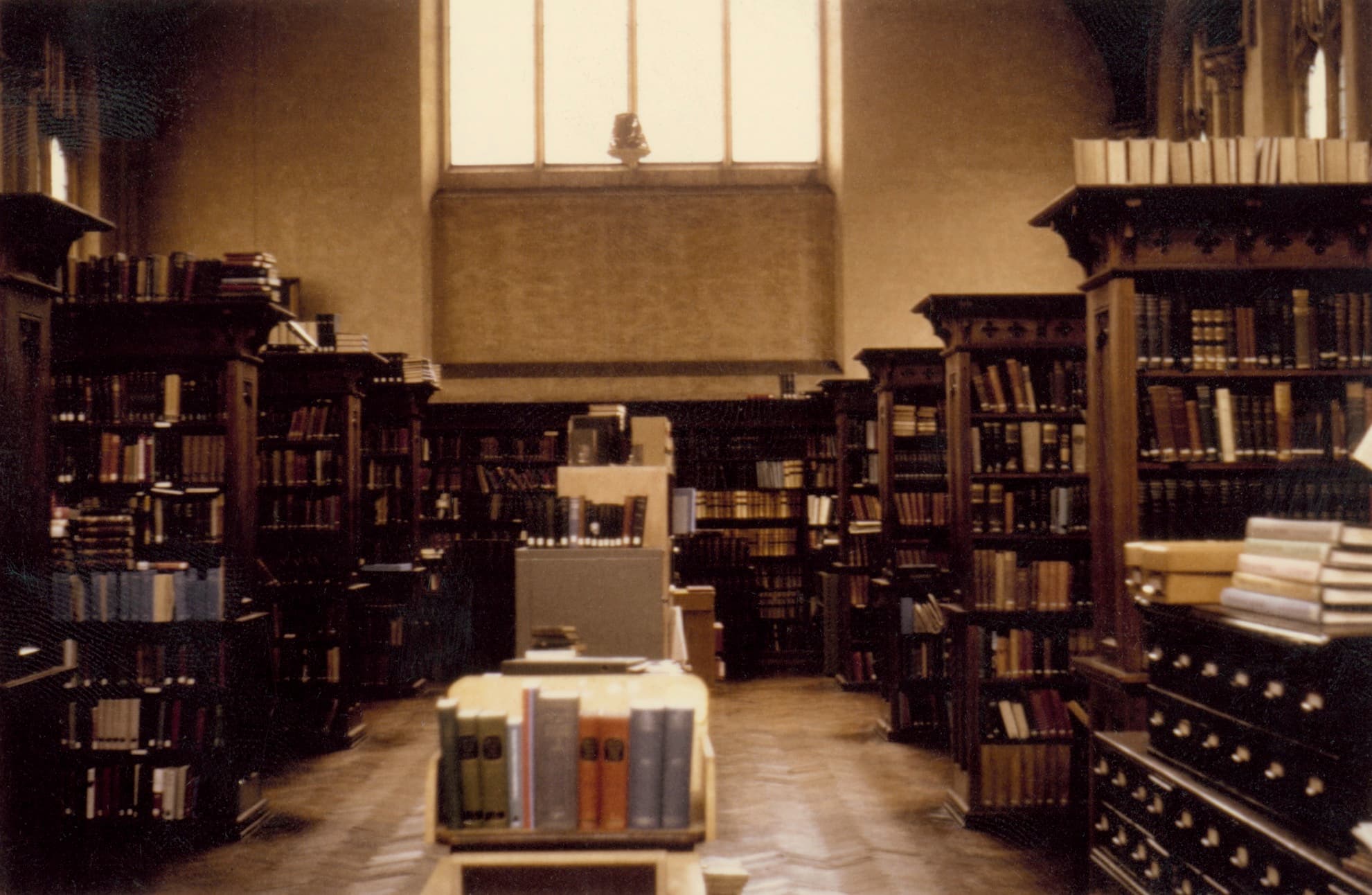
Learning has always been central to life at Ormond College, and with it came the need for a library. Today’s Academic Centre (ACA) is a much-loved study hub and tutorial space for University of Melbourne students—but it wasn’t always this way.The first Ormond College Library, now the College Chapel, was originally planned with Main Building in the 1870s and completed in 1922. Alumni donations funded its wood panelling, stained glass, blackwood furniture and first collection of books. Over the years, the Library was enriched through generous contributions from Masters, tutors, Fellows, Council members, alumni and the wider Ormond community. Among its treasures is a rare 1540 edition of Horace—one of several special works that make the Ormond Library collection unique.

By the mid-20th century, Ormond’s growth demanded a larger library. The MacFarland Library, designed in 1968 by iconic Melbourne architects Grounds, Romberg and Boyd, echoed the octagonal form of Picken Court. For over forty years, it served both the College and the Theological Hall libraries.When the Theological Library relocated, Ormond undertook a major transformation. Older volumes were moved to the George Scott Library in the J.M. Young Room, while the MacFarland Library was redesigned around the needs of 21st-century study. The result is the Academic Centre students enjoy today—combining heritage with modern facilities, and remaining a much-loved and well-used academic space.
