Sometimes you can’t make it on your own
Dr Thomas Hammond

Drawing on lessons from sport and science, Dr Thomas Hammond reminds us that wellbeing and success depend on connection – that at Ormond, as in life, no one achieves anything alone.
Monday 9 September 2024 • 5 minute read
Having just returned from the World Wheelchair Rugby Challenge held in Tokyo, alongside the Rugby World Cup, there is no better example to highlight the fact that sometimes you can’t make it on your own. As is true in rugby and in life, you need close support to be successful. Very few individual efforts actually exist. In almost every case a team, a family or group of friends operate overtly or behind the scenes providing the support that is needed. Not only are relationships and social support essential for successful performance but they are crucial factors in mental health and wellbeing.The positive effects of social support have been well documented. Over the past 20 years, the Australian Unity Wellbeing Index has systematically measured the wellbeing of the Australian population. Consistently, those who are in close relationships display significantly higher life satisfaction and lower levels of stress and depression symptoms compared to those who operate solo.
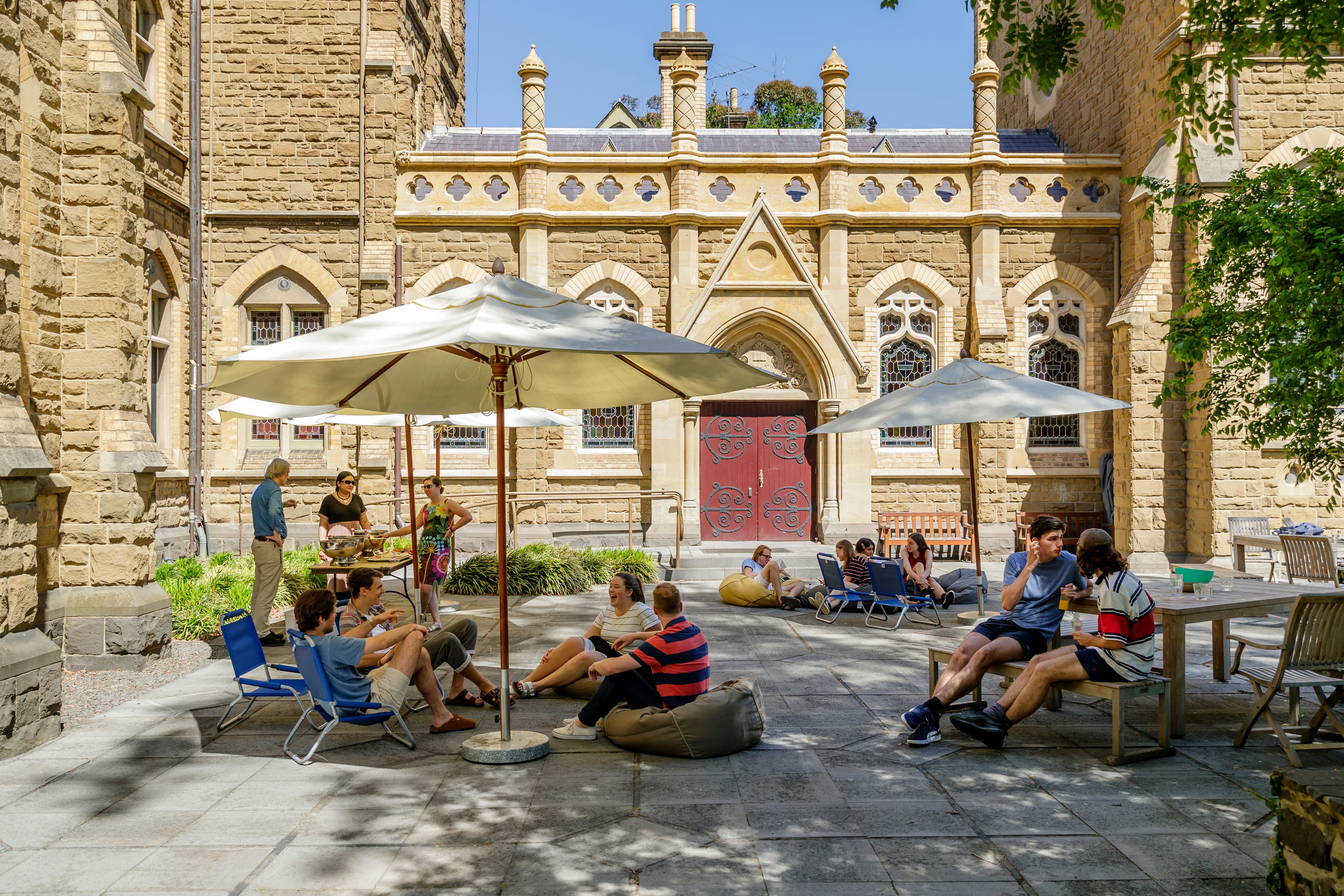
This is because relationships function as an instrumental form of coping resource. Not only does social support provide protection from negative life events but having a secure base allows us to take on challenges while someone by our side helps to buffer the stressors that inevitably occur when doing so.Both quantity and perceived quality of relationships have positive effects on mental health and wellbeing. However, as with most things, quality always wins out. In fact, the buffering effects of quality relationships appears to be independent of the frequency of social contact. That great friend or family member you might not see all that often still plays a really important role.Understanding the relationship between social support and wellbeing is particularly important to university students who require adequate resources to navigate the emergence of adulthood. A period characterised by change, opportunity, exploration and identity development.What makes Ormond such a unique environment is the community that exists around members, new and old. The opportunity to build meaningful relationships and connections not only enhances the overall experience but also the availability of resources to call on in times of need. Every day there are examples where students and staff have rallied around someone in the community to provide support.No one has to go it alone; in fact, the evidence suggests otherwise.
Explore our publications
Ormond’s publications capture the life of the College – its people, ideas and impact across generations. From stories of students shaping their world to updates from alumni making a difference far beyond Parkville, each edition reflects the spirit of curiosity and community that defines Ormond.
Read more